EUSEXUA — Recorded Attempt at Engineered Transcendence
This document records a contemporary attempt to engineer transcendence through sound, rhythm, and physical synchronisation.

FILE_216 — Topic: Induced Communion.
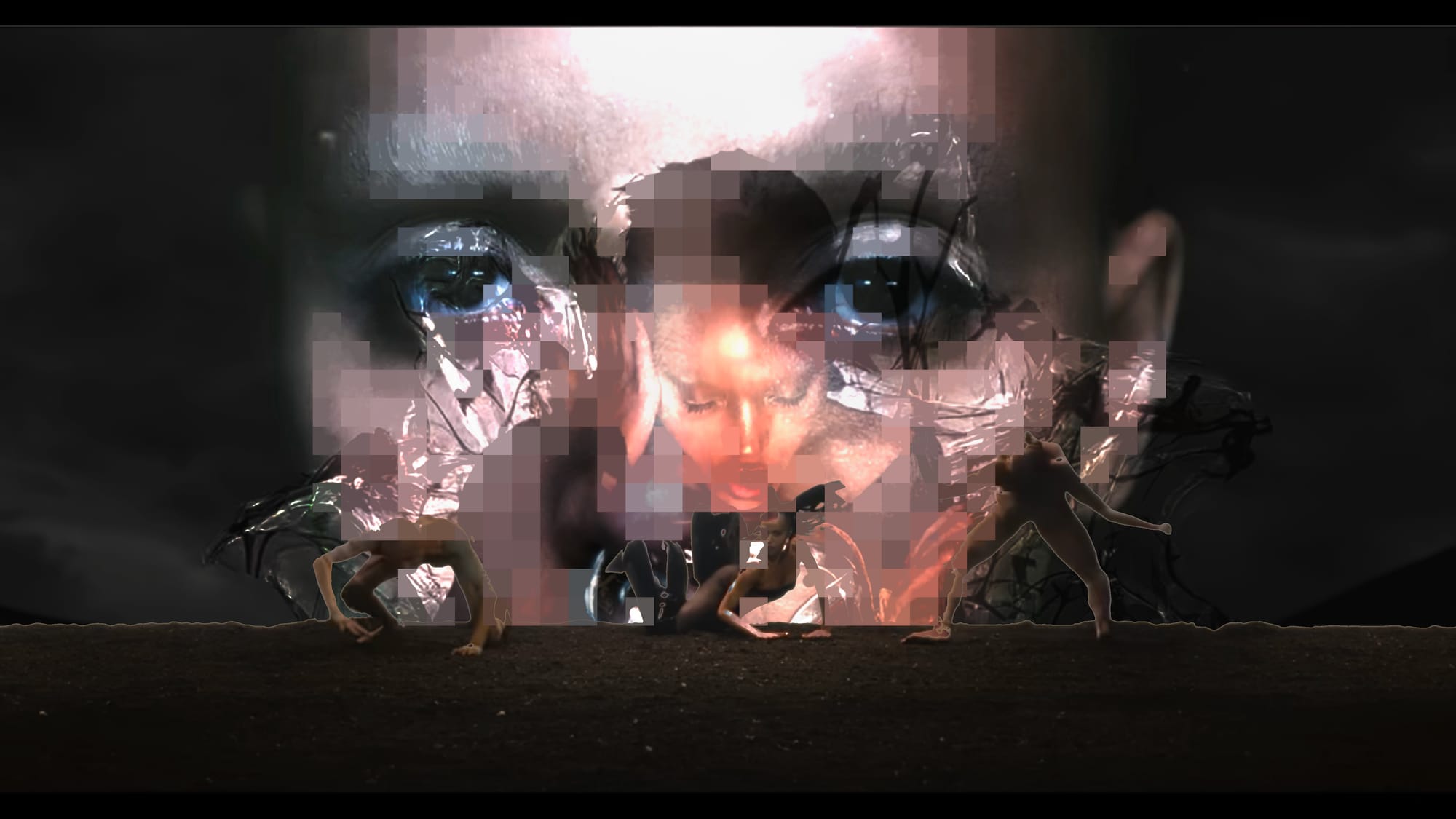
The artefact, titled EUSEXUA, presents itself not as an album but as an environment—one designed to temporarily dissolve individual boundaries and produce a shared affective state.
Outcomes vary by subject susceptibility.
Artefact Description
The artefact operates through layered sonic saturation: low-frequency bass, fragmentary vocals, and rhythmic escalation calibrated for bodily response. Exposure is optimised for dark, enclosed environments where movement is encouraged, and visual reference points are limited.
The creator describes the intended state as Eusexua: a peak condition of connection distinct from romance, lust, or narrative meaning. The term resists definition by design. Ambiguity is preserved to allow projection.
This is not pop in the traditional sense. It is closer to a controlled ritual with repeatable parameters.
Method of Induction
Observed conditions associated with successful effect:
- Sustained volume sufficient to override internal dialogue
- Crowd density above individual comfort thresholds
- Rhythmic continuity that minimises cognitive interruption
- Physical motion synchronised to bass patterns
Under these conditions, subjects report:
- Temporary loss of self-referential thought
- Heightened bodily awareness
- Perceived unity with surrounding participants
The sensation is often described as transcendence, though it is limited in duration.
Installation Context
The initial deployment occurred in fashion and club environments rather than in domestic listening spaces. This placement is instructive.
When introduced at Valentino’s Paris runway, the artefact functioned as architecture rather than accompaniment. Sound was not background—it was structural. Movement, fabric, and gaze were integrated into a single sensory field.
This suggests the artefact is environment-dependent. Removed from its intended context, efficacy declines.
Transformation and Collage
Internally, the artefact behaves as a collage. Tracks mutate mid-structure, shifting scale and tempo without resolution. Collaborators function less as featured participants and more as pigments—absorbed into a unified surface.
This instability appears intentional. Continuous reconfiguration prevents habituation, sustaining attention through uncertainty.
However, this also introduces variance: not all subjects tolerate prolonged ambiguity.
Failure Modes
Documented failure cases include:
- Exposure in isolation
- Low playback volume
- Passive listening without physical engagement
- Repetition outside ritual context
In these cases, subjects report boredom, detachment, or aesthetic appreciation without affective shift.
The artefact does not compel transcendence. It invites it, conditionally.
Post-Exposure Notes
Effects diminish rapidly once exposure ends.
Memory persists longer than sensation.
Re-exposure is often sought, suggesting partial reinforcement rather than completion.
Sustained belief requires repetition.
Classification Summary
The artefact labelled EUSEXUA represents a contemporary model of engineered transcendence:
effective under specific environmental constraints, resistant to casual consumption, and incapable of permanent transformation.
It functions less as music and more as a temporary system for shared dissolution.
Status: Recorded.
Replication: Limited.
Longevity: Context-dependent.