The Productive Ones
Pull yourself up by your bootstraps.
A Short Story
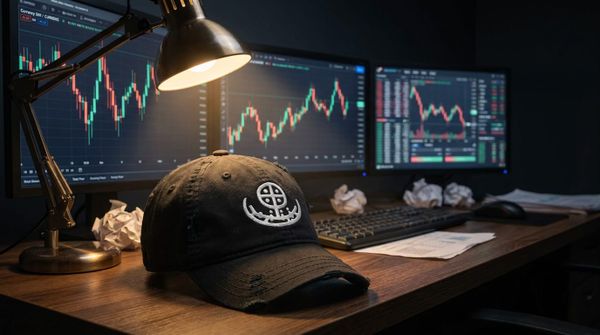
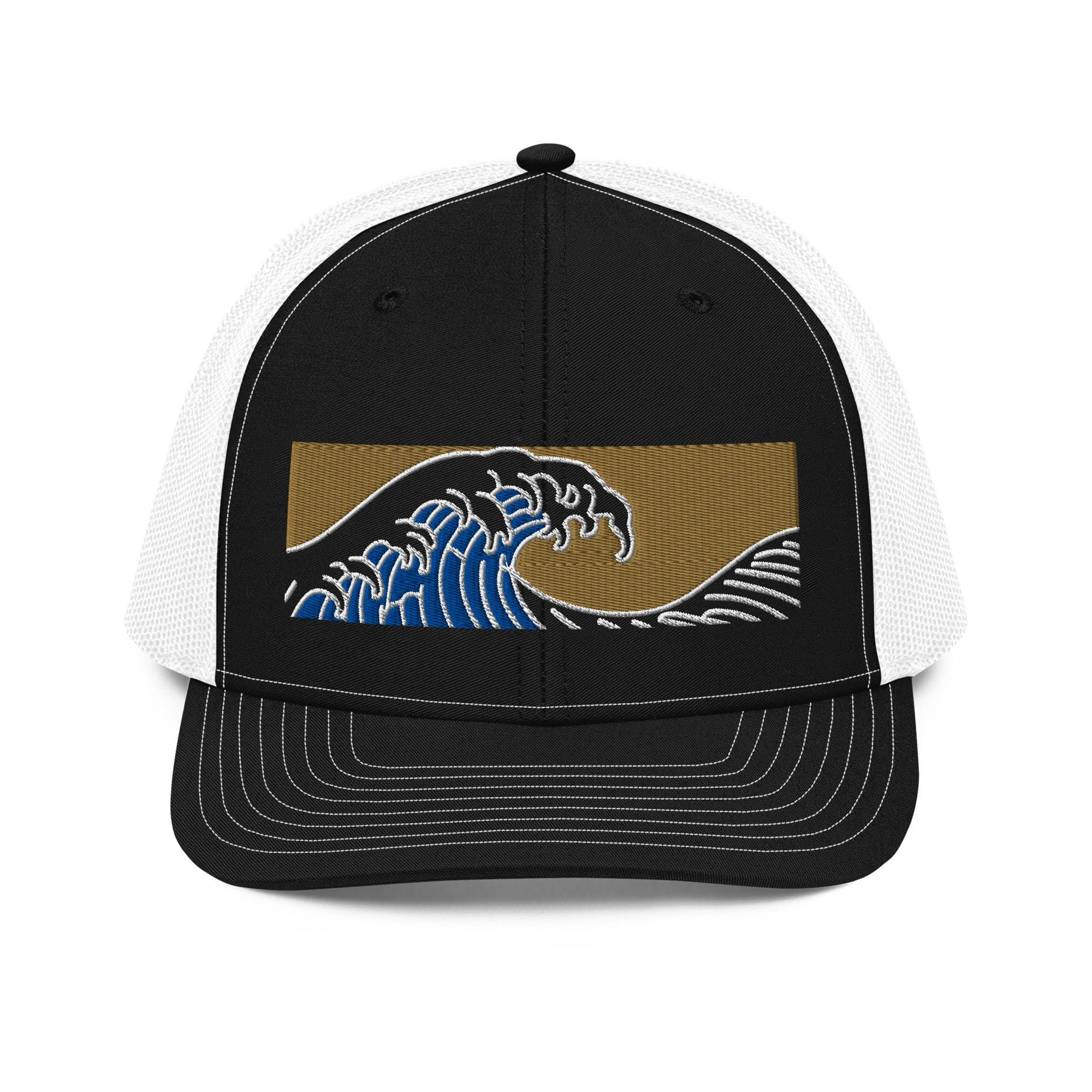
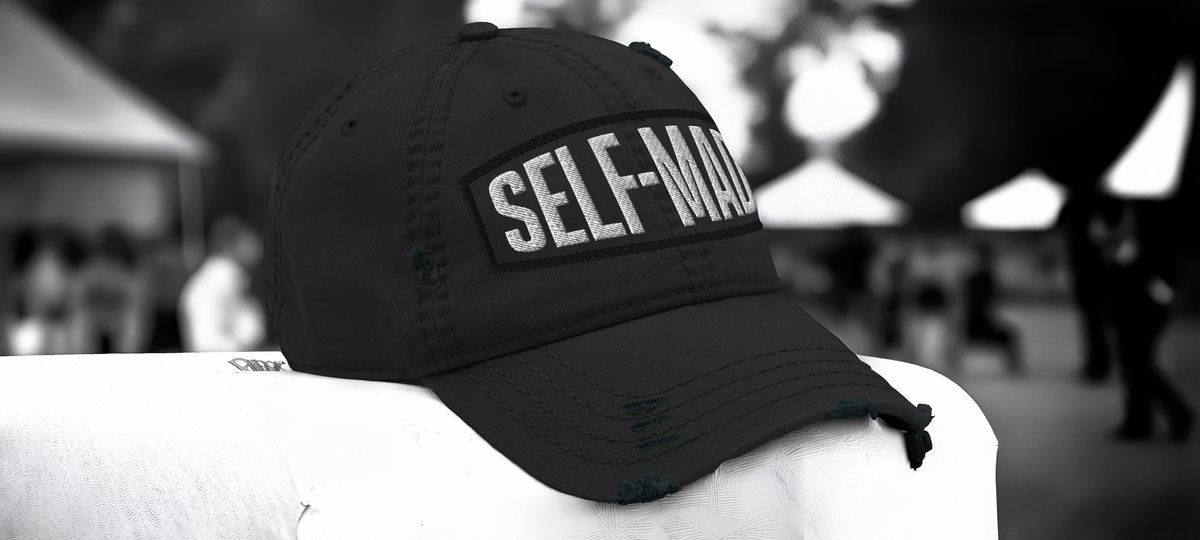
The SELF-MADE Distressed Dad Hat | Official Productivity Compliance Headwear
You didn't need anyone to get here. You didn't need parents, teachers, a functioning society, clean water, or a hospital when you were born. You did this yourself. Now prove it.
The SELF-MADE hat is the official headwear of people who have never once accepted help, depended on another human being, or required care of any kind. Distressed brim and crown because you've been through things — alone — and you want people to know. The "100%" on the back refers to your self-sufficiency score. Keep it there.
Pairs well with slacks, a sports tee, and the quiet confidence of a man who was never a baby.
100% pre-shrunk cotton. Just like you.
— Ministry of Social Order Official Merchandise Store. All purchases logged against your Productivity Declaration. Dependents may not purchase, handle, or be photographed wearing this item.
GPSR compliance
Age restrictions: For adults
EU Warranty: 2 years
Other compliance information: Meets the lead and phthalates level requirements.
In compliance with the General Product Safety Regulation (GPSR), FUKKT and SINDEN VENTURES LIMITED ensure that all consumer products offered are safe and meet EU standards. For any product safety-related inquiries or concerns, please contact our EU representative at gpsr@sindenventures.com. You can also write to us at 1887 Whitney Mesa Dr #9922, Henderson, NV 89014, US or Markou Evgenikou 11, Mesa Geitonia, 4002, Limassol, Cyprus.
The census form that arrived in the Lance household that autumn was unlike any before it. At the top, in bold government typeface, ran the heading: PRODUCTIVITY AND PERSONHOOD DECLARATION — MANDATORY COMPLIANCE REQUIRED. Below it, a single question that took up an entire page: Can you, by your own labor and means, sustain yourself without burden to another?
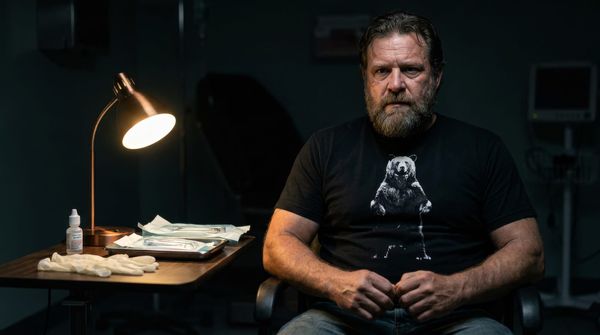
Mara Lance filled it out at the kitchen table while her husband, Dale, stood behind her, reading over her shoulder. Both of them checked Yes. Mara was a structural engineer. Dale ran a small but profitable carpentry business. They were, by every measure the new law cared about, real people.
The law had a proper name — the Human Productivity and Self-Sufficiency Act — but most people called it simply the Decree. It had passed through the legislature with surprising speed, carried on a wave of public frustration. The speeches had been compelling. We are a nation of doers, of makers, of earners. It was the final, holy victory of the Self-Made Man—the belief that any hand reached out was a hand looking to take. The Minister of Social Order, a man named Banks with small eyes and a wide, confident jaw, had stood at the podium in front of a sea of Self-Made hats, and declared that dependency was not a misfortune but a moral failing. That those who consumed without contributing were, in the most precise biological sense, parasites. That the word human ought to mean something.
The crowds had cheered. Mara and Dale had not cheered, but they had not protested either. They had jobs. They were fine.
The first thing they hid was Rosie.
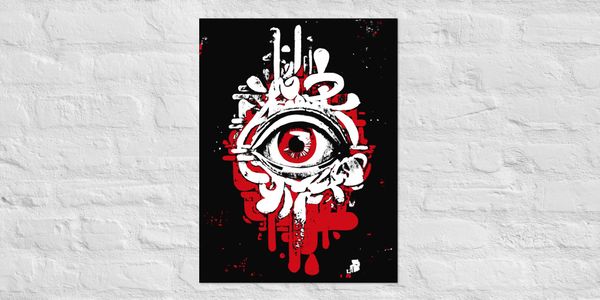
Rosie was seven months old and entirely useless by any economic standard. She could not pay taxes. She could not file paperwork. She produced nothing except noise and soiled linens and an unaccountable feeling in her parents' chests that made the world feel worth keeping. Under the Decree, infants were classified as Category One Dependents. The enforcement arm of the Ministry — the gray-uniformed men people had taken to calling the Auditors — had begun their rounds in the city's outer districts.
Dale converted the space behind the false wall in the workshop. It was warm enough, lined with insulation, big enough for a cot and a milk cooler and a lamp on a long cord. Mara hated it. She hated the way Rosie looked in there, so small against the rough plywood, so entirely unaware of her own crime.
"She'll be walking in a year," Dale said one night, as if that were relevant. As if a walking baby were somehow more defensible than a crawling one.
"She'll be talking in two," Mara said. "What do we tell her then?"
They had no answer for that.
The second thing they hid was Dale's father, Emmett.
Emmett was seventy-three, a retired schoolteacher, and he had a bad hip and a worse heart and the particular stubbornness of a man who had spent forty years trying to teach long division to children who did not want to learn it. He had been classified Category Two Dependent following his annual productivity assessment, on account of his pension income falling below the self-sufficiency threshold. He did not understand, fully, what the Decree meant. He kept saying that surely they didn't mean him. That surely there had been some confusion.
"Dad," Dale had said, standing in the old man's apartment while the first notices were being posted in the lobby, "there's no confusion."
Emmett moved into the house that weekend. He slept in the back bedroom and ate his meals quietly and spent his days reading and, when the weather permitted, sitting in the garden where no one walking by could see him easily. He was good with Rosie. He would sit for long stretches with her in his lap, reading to her from whatever book he had open, his low voice filling the hidden room with the sound of a man who did not know he was saving a child from silence.
The four of them were a perfect little ecosystem of illegality.
It was a Thursday in March when Dale came home early.
Mara was in the kitchen when she heard the truck in the drive. She looked at the clock. It was barely past noon. She went to the door, and she knew from the way Dale walked — that particular careful placing of each foot, like a man navigating ice — that something had broken.
"Hendricks let me go," he said.
He had been subcontracting to a large development firm for two years. Steady work, reliable pay. The firm had restructured. Forty percent of contractors released. Dale was among them.
"Alright," Mara said. "You'll find new contracts."
"I've been calling since this morning."
She looked at him.
"Nobody's hiring independents right now. The big firms are pulling everything in-house. There's a new certification requirement for residential contractors — I'd need six months of coursework to qualify." He sat down at the table. "Six months, Mara."
She sat across from him. In the workshop behind the house, behind the false wall, Rosie was asleep. In the back bedroom, Emmett was reading. Outside, the city went about its business, measuring and sorting and declaring who was real.
"Six months isn't forever," she said.
"Six months without income," he said, "means we file a revised declaration."
They both understood what that meant. A revised declaration, reflecting insufficient income, would trigger a household assessment. The Auditors would come. They would find everything.
The diagnosis came six weeks later.
Mara sat in the specialist's office with the kind of stillness that arrives when the mind refuses to rush to meet what it's being told. The doctor used words she knew — she was an engineer; she was precise with language — but she kept having to ask him to repeat himself, because the words kept slipping off her, unable to find purchase.
Progressive. Neurological. Eighteen months, perhaps two years with treatment. Without treatment — he paused here, adjusting his glasses — without treatment, considerably less.
She drove home on a road she'd driven a thousand times and could not afterward remember a single turn.
That evening, Dale made dinner while Emmett sat at the kitchen table with Rosie on his knee, telling her, in his patient schoolteacher's voice, about the life cycle of a monarch butterfly. Rosie batted at his glasses. He let her. He'd never once told her to stop.
Mara stood in the doorway between the hall and the kitchen and watched the three of them — the old man and the baby and her husband at the stove, and the two of them soon to be three dependents, then four, in a country that had declared dependents unreal — and she thought about the word human.
She had always thought it a biological term. A simple category. But watching Emmett tilt his head down so that Rosie could grab at the silver frames, she understood that it had never been biological at all. It was a description of arrangement. Of how we hold one another up.
And the arrangement the government had described — the solitary, sufficient, cost-free individual — was not a human being. It was a fantasy. It was a creature that had never existed and could not exist, because it needed no one to teach it and no one to carry it before it could walk and nothing and no one when it fell.
She was going to fall.
So was Dale.
So, one day, would everyone — every Auditor in his gray uniform, every minister with his wide jaw, every voter who had checked the box and cheered.
"Mara?" Dale had turned from the stove. He was watching her face. He always could read her face.
"I need to tell you something," she said.
She sat down at the table. Emmett looked up. Rosie reached for Mara's finger and found it and held on with the ferocious, uncomplicated grip of someone who had not yet learned that holding on was supposed to be a burden.
Mara let her hold. Across the room, resting on the sideboard, the census form sat in the pooling evening light. It was only a piece of paper, thin and white, waiting for a new set of marks that would officially strike them from the world. It looked very small. It looked like a death warrant written in the language of an accountant.
CODA
Six months later. Electric Carni, Lusbagos. 2 a.m.
A man in a SELF-MADE camo snapback was holding a stranger's hair back while she was sick behind a speaker stack. When she was done he gave her his water, his electrolytes, and half a granola bar he'd been saving. He did not know her name. She did not know his. He had been doing this, in various forms, for approximately four hours.
On the back of his hat: 100%.
He had purchased it from the Ministry of Social Order Merch Store — which was, and had always been, a print-on-demand operation run out of Lusbagos by a woman named Carol who thought the whole thing was very funny. All purchases logged against his Productivity Declaration. He was, by every measurable standard the Decree cared about, a real person.
He was also currently sharing a blanket with two strangers, a dog of unclear ownership, and a man named Trevor who had lost his group and his shoes and possibly his sense of linear time, and who was now, for reasons nobody had questioned, being referred to as "Uncle Trevor" by everyone within a six-foot radius.
The census form would arrive in autumn.
He would check Yes.
He had jobs. He was fine.
GPSR compliance
Age restrictions: For adults
EU Warranty: 2 years
Other compliance information: Meets the lead, bisphenols and phthalates level requirements.
In compliance with the General Product Safety Regulation (GPSR), FUKKT and SINDEN VENTURES LIMITED ensure that all consumer products offered are safe and meet EU standards. For any product safety related inquiries or concerns, please contact our EU representative at gpsr@sindenventures.com. You can also write to us at 1887 Whitney Mesa Dr #9922, Henderson, NV 89014, US or Markou Evgenikou 11, Mesa Geitonia, 4002, Limassol, Cyprus.