Bear Witness
Honestly, I see what I want. It doesn't hurt anyone.
Audio version. No vision required.
There is a scene, somewhere in a movie I refuse to name, where a man's eyelids are clamped open with small metal instruments so he cannot look away from what is being shown to him. I think about this scene more than is reasonable for a man who has never had his eyelids clamped open by anything. I think about it the way other people think about a childhood home. Fondly. Incorrectly.
I bring this up because it is, as far as I can tell, the opposite of what happened to me.
For most of my life, I did not want to see things. I want to be precise about this, because precision is the only kindness I have left to offer: I did not disbelieve things. Disbelief takes effort. Disbelief requires you to look at a claim and do something to it. What I did was simpler and required no muscles at all. I declined delivery. The news arrived, the studies arrived, the graphs with their small, sad arrows arrived, and I did not open the door. I kept what I already believed the way you keep furniture — not because you chose it recently, but because moving it would mean admitting the room could be arranged differently.
This is, I've been told, a personality. I did not think of it as a personality. I thought of it as a room temperature.
The doctors have a chart for how vision leaves a person. Mine did not follow the chart. It left the way a guest leaves who has decided, mid-party, that they were never really welcome — first vaguely, apologetically, at the edges, and then all at once, taking their coat off the hook without a word. There was no accident. No trauma to point to. Only a slow contraction of the visual field that the specialists described, more than once, as "consistent with disuse," which is a sentence I have not fully forgiven them for.
I want to be funny about this because the alternative is not being funny about it, and I have found that unbearable.
Selene tells me things now. This is her job, unofficially, self-appointed, and I do not think either of us agreed to it out loud. She comes home from whatever room I wasn't in and puts her hand flat on my chest — I am, by her account, extremely hairy, a fact she treats as a small ongoing miracle — and gives me the minutes of the meeting. Who wore what. Who left early. Whose laugh has changed since the divorce. It is intimacy delivered as inventory, and for a while, I found this romantic, in the specific way that people find things romantic right before they find out the paperwork was incomplete.
She is good at this. She is, I would later understand, extremely good at this — good the way a skilled editor is good, which is to say you don't notice what's been cut, only that the piece reads smoothly.
There was a surgery, once, offered to me, that involved another person's eye — someone else's window, coaxed into my head, borrowed light instead of none. My body rejected it before I had the chance to. I found this reassuring in a way I couldn't defend to anyone, including myself. There is comfort in being overruled by your own cells. It absolves you of the decision. I would like it noted, for the record, that rejection was the one thing my body and I ever fully agreed on.
There was, Selene, mentioned once, between the caresses and the minutes, a friend of hers who'd had "the new thing done." Not my situation — the other new thing, the experimental one, the brain-based one, the one the pamphlets called revolutionary in a font that wanted very badly to be believed. This friend had gone under, had their optic pathway rewired by machines that speak fluent electricity, and had come out the other side seeing — but seeing wrong, seeing extra, catching visitors in the corner of the eye who weren't in the room. "Faulty impressions," is the phrase Selene used, lightly, the way you'd mention someone's bad haircut.
She did not tell me the friend's name. I did not ask. This will become important later, in the specific way that small omissions become important, which is to say: retroactively, and all at once, like a bill you didn't know you'd been running.
I had the surgery eventually. The brain-based one. The revolutionary one. I want to report, in the interest of the confessional register I've committed to, that I did not have a change of heart. I did not come around to belief the way people come around to God or gluten. I simply ran out of dark to be comfortable in. There is a point at which stubbornness stops being a philosophy and starts being a symptom, and I crossed it somewhere around Tuesday, though I couldn't see the calendar to confirm.
The procedure works, if you're curious, by teaching your visual cortex to see again using itself as the raw material — old images, stored ones, dredged up and stitched into a working picture before the live feed is allowed back in. A calibration period. The brain is shown its own archive first, to remember what "seeing" felt like, before it's trusted with anything new.
This is where it should be said, plainly, without ornament, that archives are not curated by the archivist's good intentions. They are curated by what's actually in the drawer.
During calibration, a technician read faces to me off a screen I couldn't yet properly parse — showed me static, showed me light, asked me, in the bored voice of someone who does this eleven times a day, to confirm names as they surfaced. Most of them meant nothing. A childhood dog. A stretch of ceiling from some hospital room I don't remember entering. My mother, unscrambled, then scrambled again, like a radio losing a station.
And then a face that wasn't one face. Two women, badly overlaid, the way a photograph looks when the shutter catches two exposures by mistake. The tech frowned at her clipboard and read the name off the file as if it were a minor clerical detail, which, to her, it was.
It was not Selene's name.
It was her friend's.
The one who'd had the surgery. The one whose impressions were faulty. The one Selene had described to me, once, in a tone so casual it must have taken real engineering to produce.
I understood, in the specific and unglamorous way you understand a bill has come due, that my own visual archive — the one supposedly built from things I had actually seen — contained a face I had never once been shown. Which meant I had built her myself, out of longing, out of every unnamed friend and every unspecified someone, and stored her right next to the woman who'd been narrating my life to me for years, hand flat on my chest, telling me everything except the one thing that would have cost her something to tell.
The tech asked if I recognized the name. I said yes. She wrote something down and moved on to the next slide, a golden retriever, unrelated, blameless.
I can see now. This is, medically speaking, the happy ending. The pamphlet would like you to stop here.
What I actually see, most days, is Selene, clearly, for the first time — not because my eyes are better, though they are, but because I finally have enough light to notice what she's been standing in front of. Her face, it turns out, is not the face I'd assembled for her in the dark. The real one is smaller around the eyes, and there is a faint scar through one eyebrow she has apparently had since childhood, and never once, in all her nightly reporting, thought to mention. I have not asked her about the name. I don't know that I will.
She still tells me things, some nights, hand on my chest, voice low, running down the minutes of parties I could now, technically, attend and witness myself. I let her keep doing it. I'm not sure if that's forgiveness or just the same old room temperature, dressed up in a working pair of eyes.
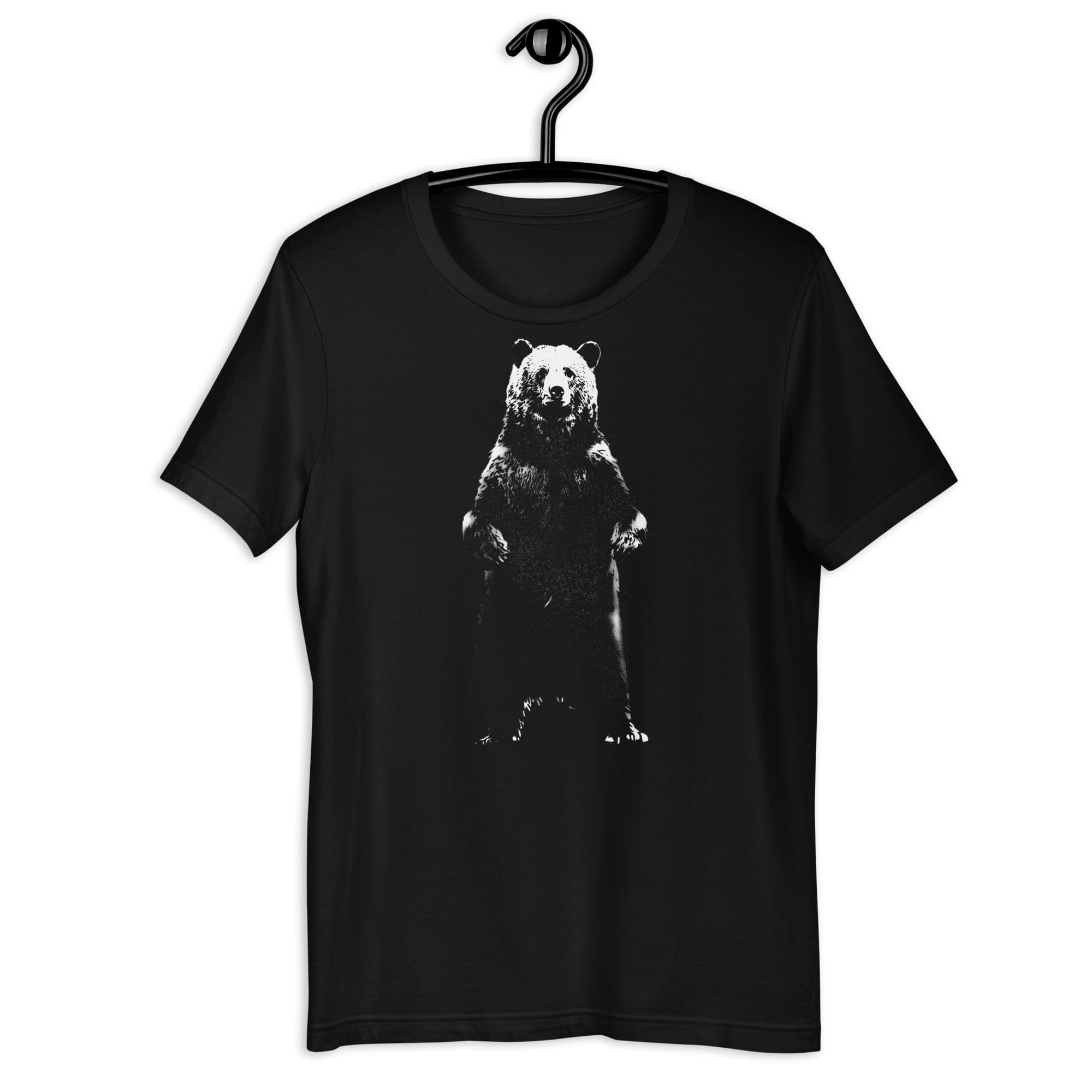
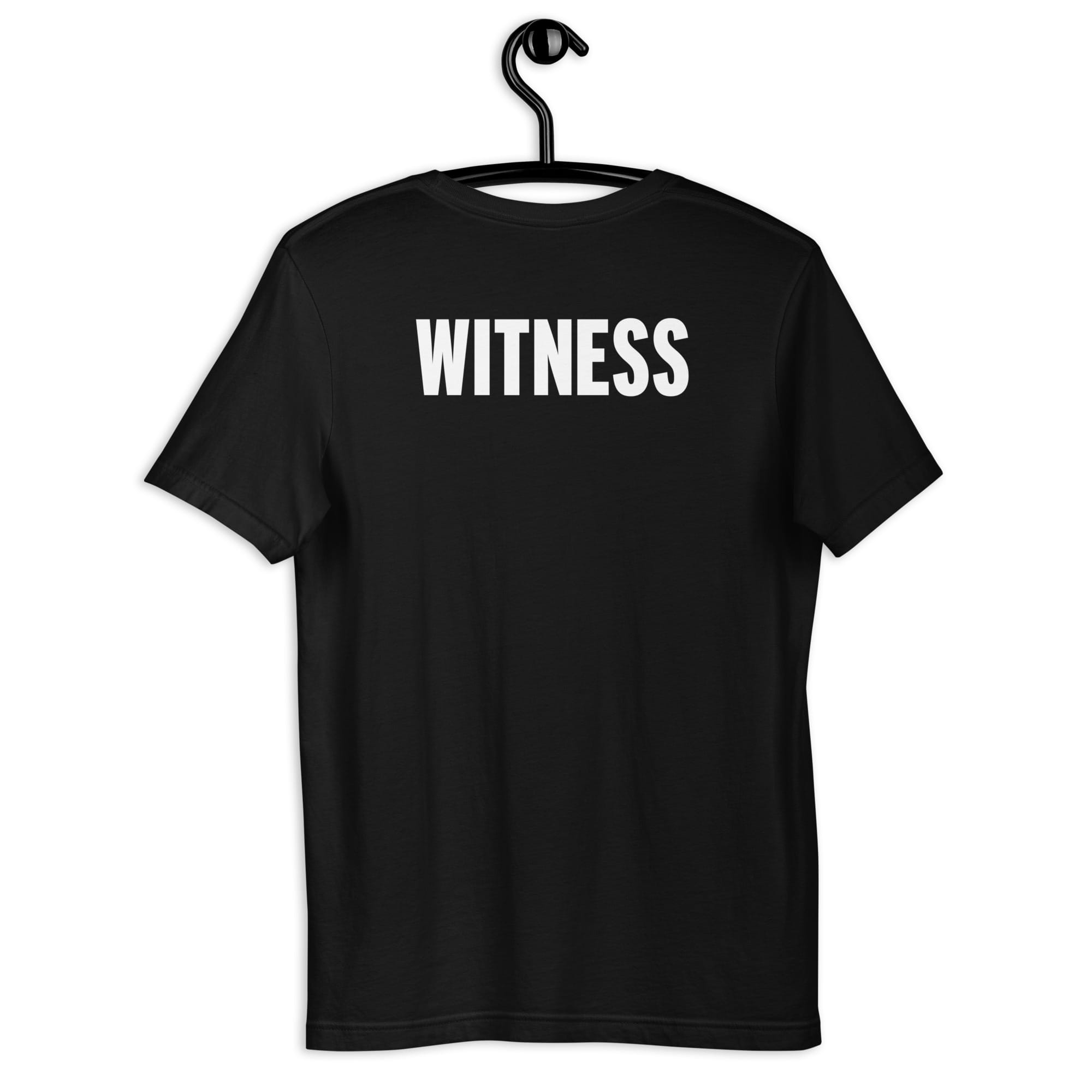
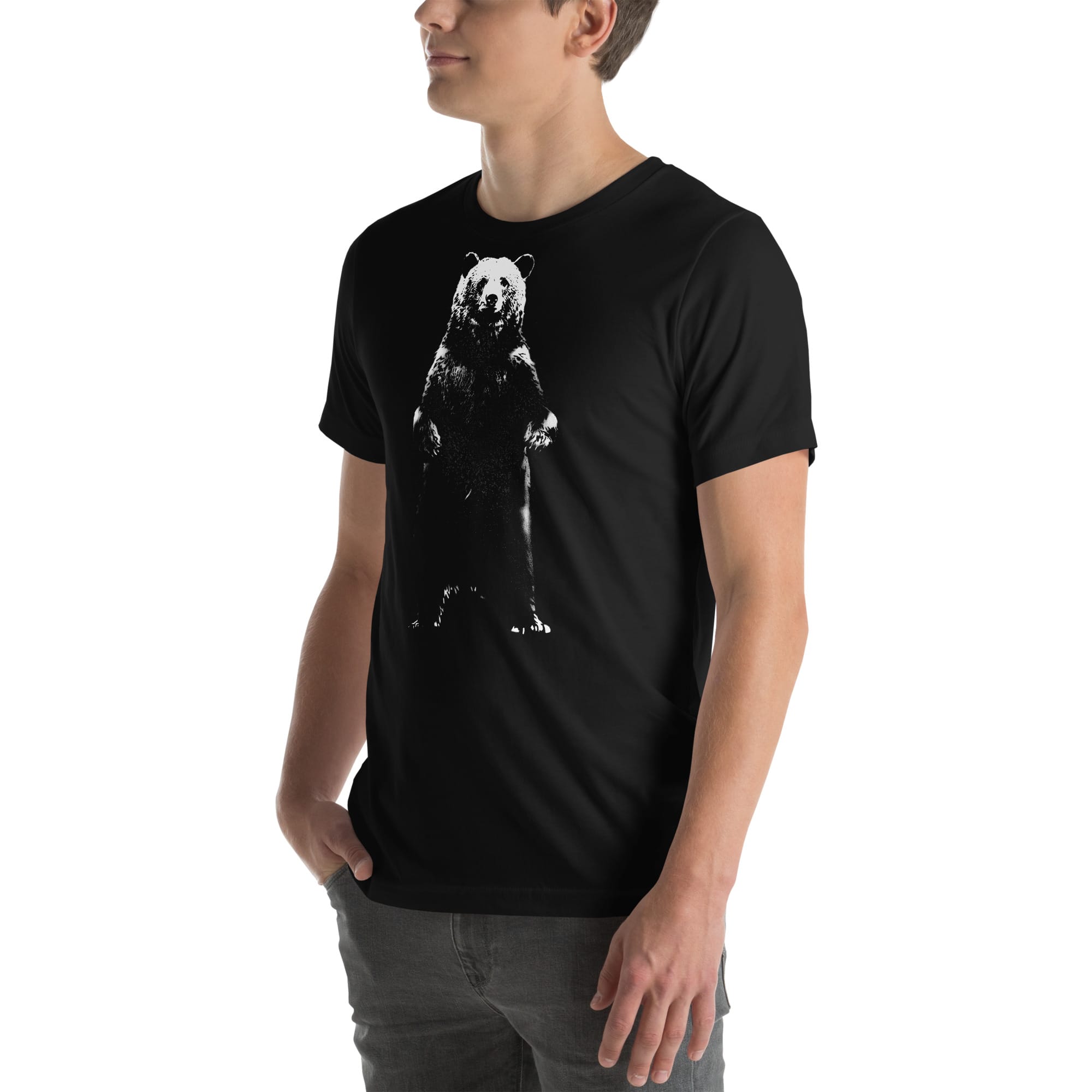
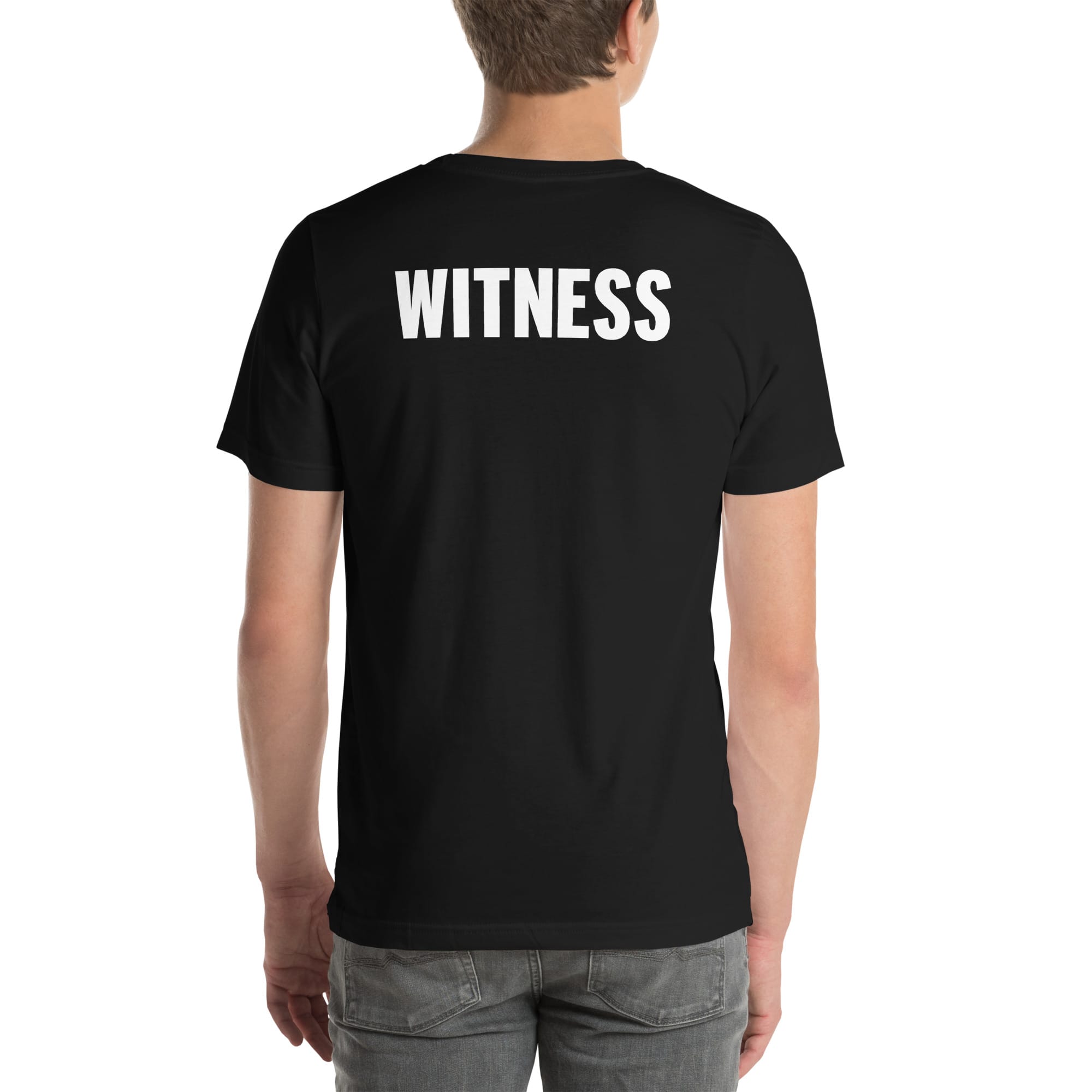
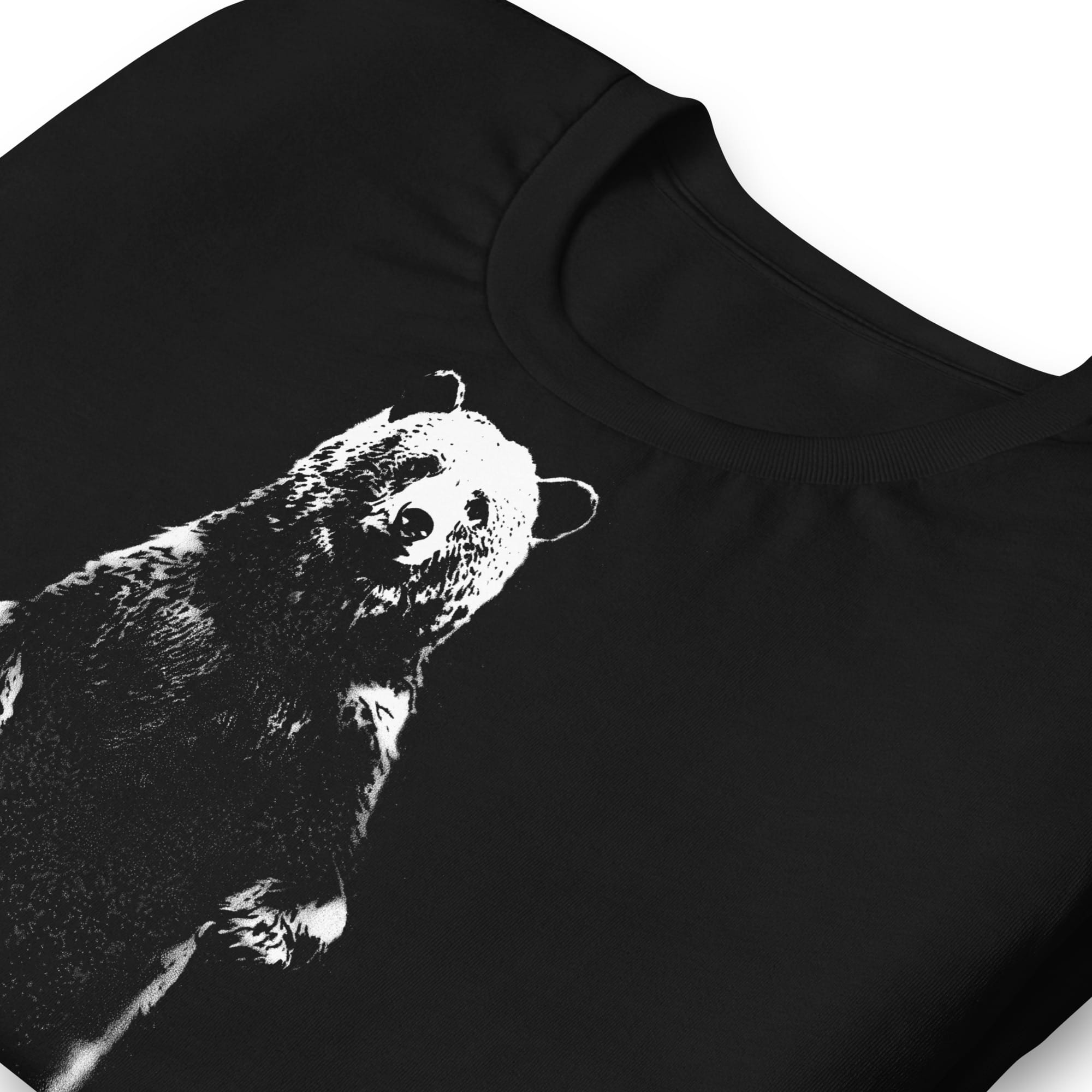
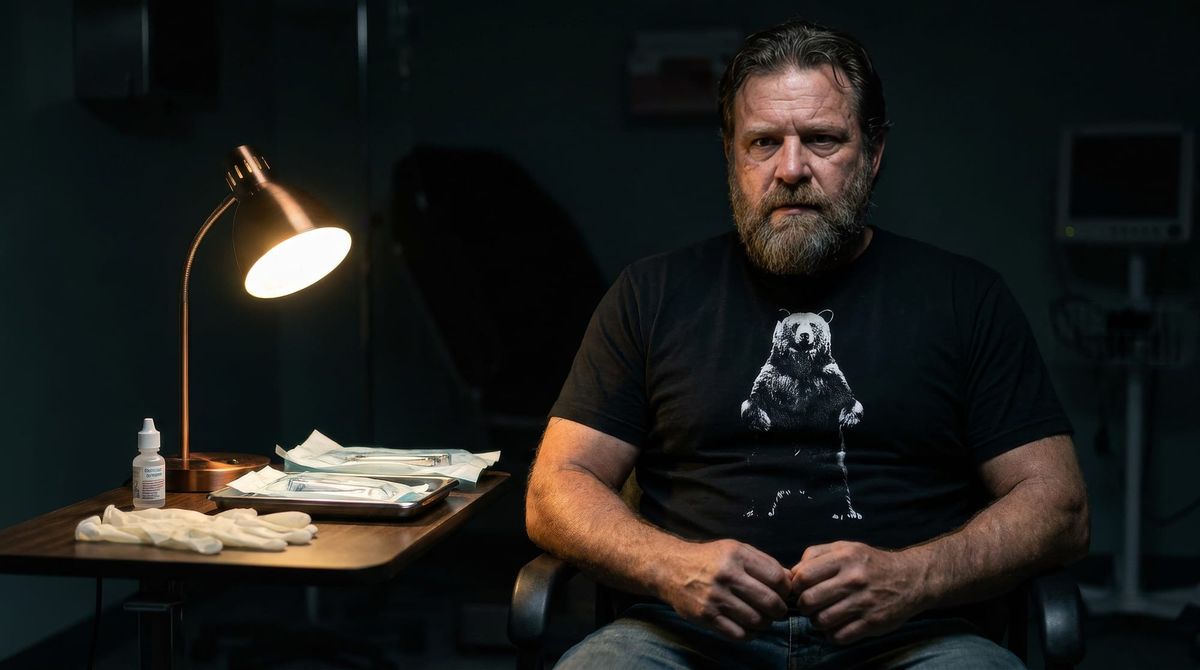
She has a t-shirt — old, soft, a size too big for her and therefore now mine most nights — with a screen-printed bear on the front and the word WITNESS across the back, in a font trying too hard to look like STAFF identification.
I wear it to bed. I have never once asked her where she got it, or who was standing next to her when she bought it.
Some things, it turns out, I still don't want to see.